
Elisha Otis
Inventor of the safety elevator that revolutionized vertical transport.

Unknown author · Public domain
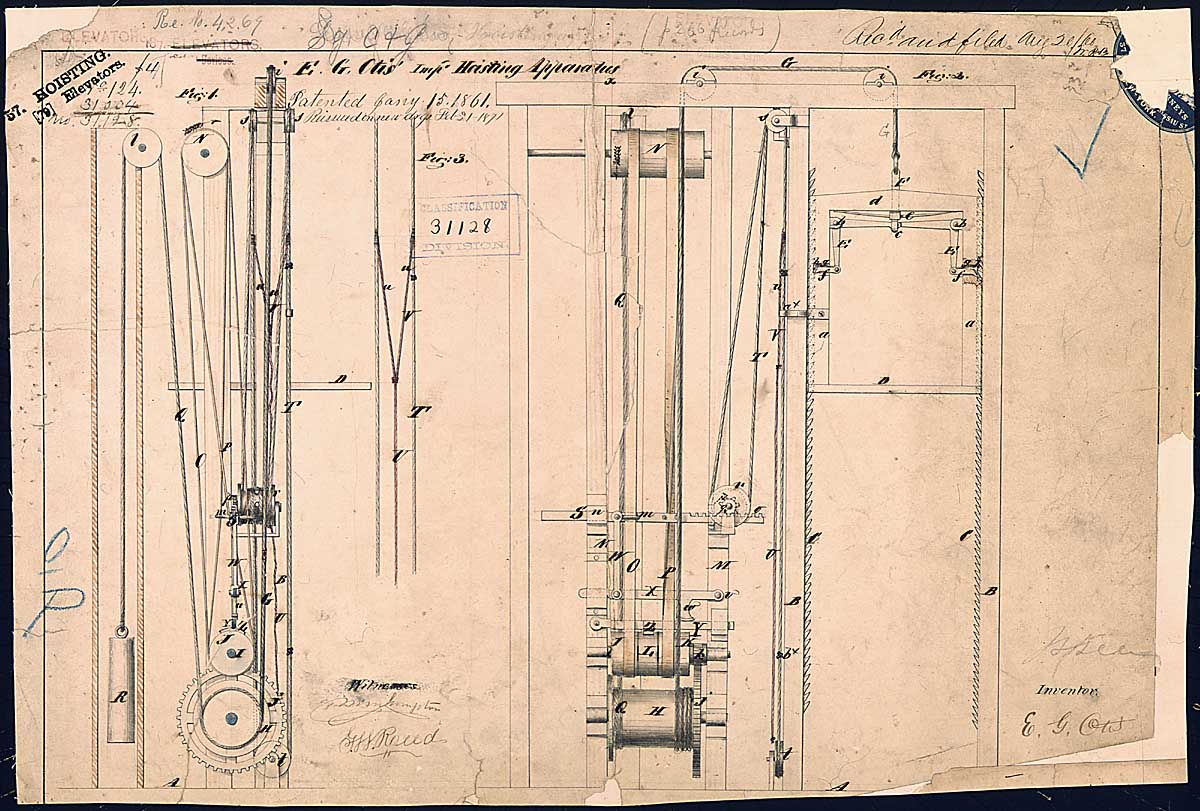
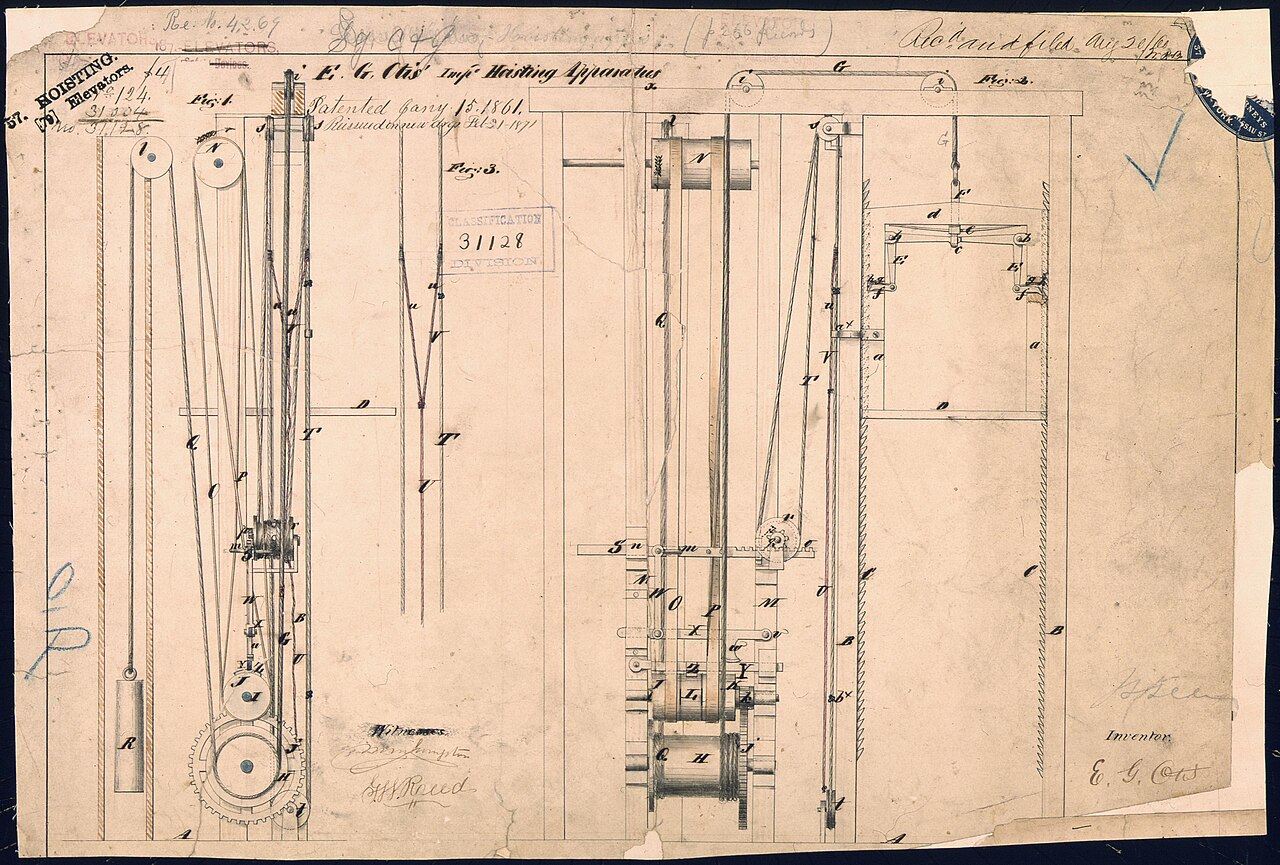
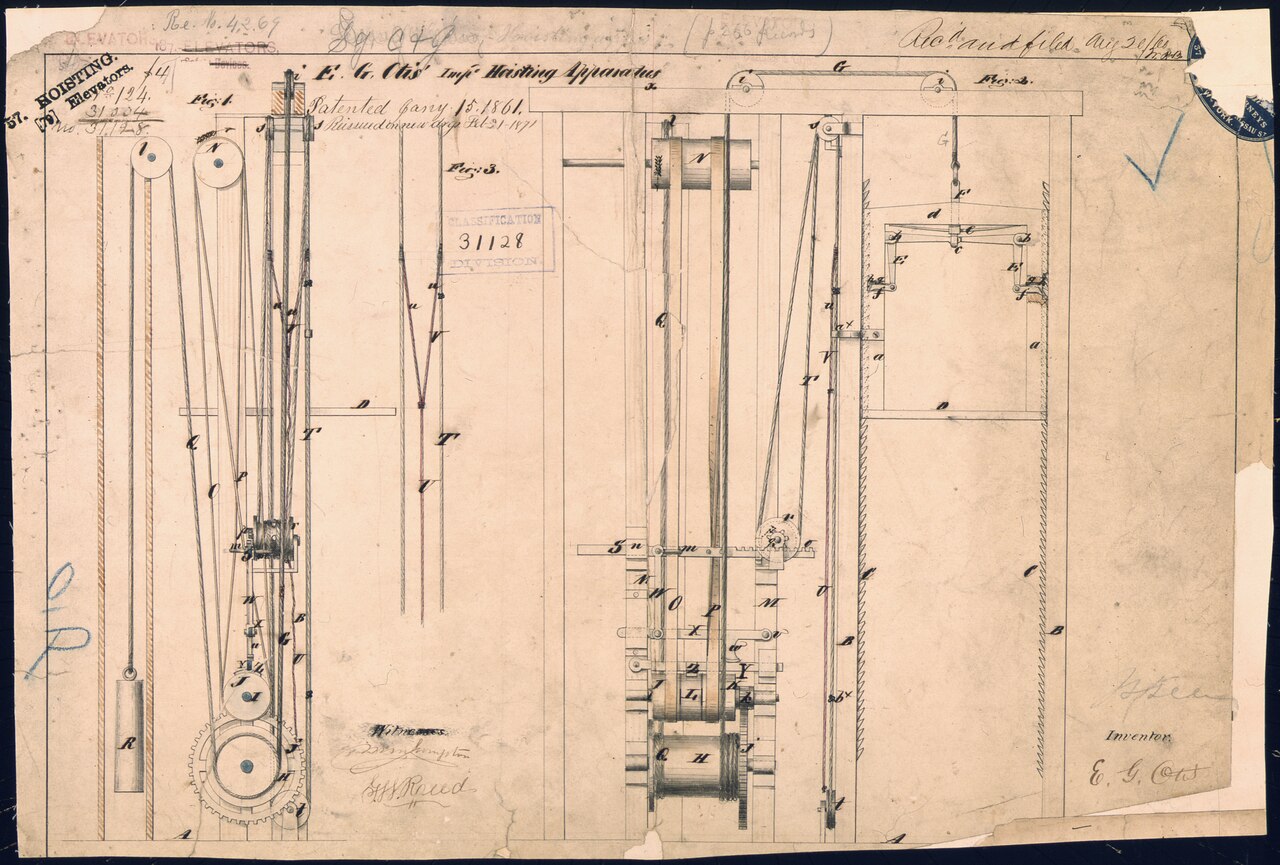
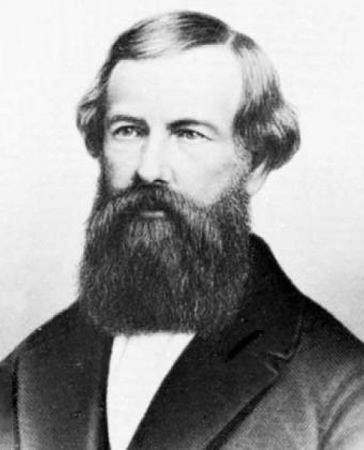
Elisha Graves Otis, born in Vermont in 1811, founded the company that still bears his name. His key invention, a safety device for elevators, stopped them from falling if the hoisting cable snapped. This made passenger elevators a practical reality. He installed the first one for public use in a New York City store in 1857.
Otis left home at nineteen, working as a wagon driver in Troy, New York. He married Susan Houghton in 1834, and they had two sons. A severe bout of pneumonia nearly killed him that year, but he recovered and moved his family to Vermont. There he built a gristmill, then converted it to a sawmill, but neither succeeded. He turned to building wagons and carriages. After his wife died in 1842, he remarried in 1845 and moved to Albany, where he worked as a master mechanic in a bedstead factory. He invented an automatic lathe that turned bedposts four times faster than by hand. He started his own business to sell it in 1848, but it lasted only two years. He also invented a railway safety brake during this time.
By 1852, Otis was in Yonkers, New York, installing machinery at a bedstead factory. The factory needed a hoist to lift heavy equipment, but the risk of a rope breaking was serious. Otis solved the problem with his safety elevator, which automatically stops if the rope breaks. He left the factory the next year to start the Otis Elevator Company. A public demonstration at the New York Crystal Palace in 1854 sparked demand. He installed the first passenger safety elevator at the E. V. Haughwout Building in 1857.
In his spare time, Otis worked on bread-baking ovens, train brakes, and a steam plow (patented in 1857). He also patented a rotary oven in 1858 and, with his son Charles, an oscillating steam engine in 1860. The plow was not a commercial success. Otis died of diphtheria in 1861 at age 49 and was buried in Yonkers.
Later, an Otis employee coined the term "escalator" for moving staircases. The company was bought by United Technologies in 1976 and spun off as an independent firm in 2020. A World War II Liberty ship was named after him.
- born
- August 3, 1811
- died
- April 8, 1861
- field
- Industrialist, inventor
- nationality
- American
- known_for
- Inventing the safety elevator
Lore & Background
Elisha Graves Otis was born on August 3, 1811, in Halifax, Vermont, to Stephen Otis and Phoebe Glynn. He moved away from home at age 19, eventually settling in Troy, New York, where he worked as a wagon driver for five years. In 1834, he married Susan A. Houghton, with whom he had two sons, Charles and Norton. After a severe case of pneumonia, he moved his family to the Vermont Hills on the Green River, where he built a gristmill and later a sawmill, but neither attracted enough customers. He then built wagons and carriages. His wife died in 1842, leaving him with two young sons.
In 1845, Otis married Elizabeth Boyd and moved to Albany, New York, where he worked as a master mechanic in a bedstead factory and invented an automatic turner for bed posts. In 1848, he started the Hudson Manufactory to market his invention, and also invented a railway safety brake, but the business lasted only two years. By 1852, he had moved to Yonkers, New York, to work at the Maize & Burns bedstead factory. There, he invented the safety elevator after the factory needed a hoist to lift heavy equipment. In 1853, he left the factory and started the Otis Elevator Company. After a public demonstration at the New York Crystal Palace in 1854, demand for his safety elevator grew. He installed the first safety elevator for passenger service at the E. V. Haughwout Building in New York City on March 23, 1857.
Reader's Guide
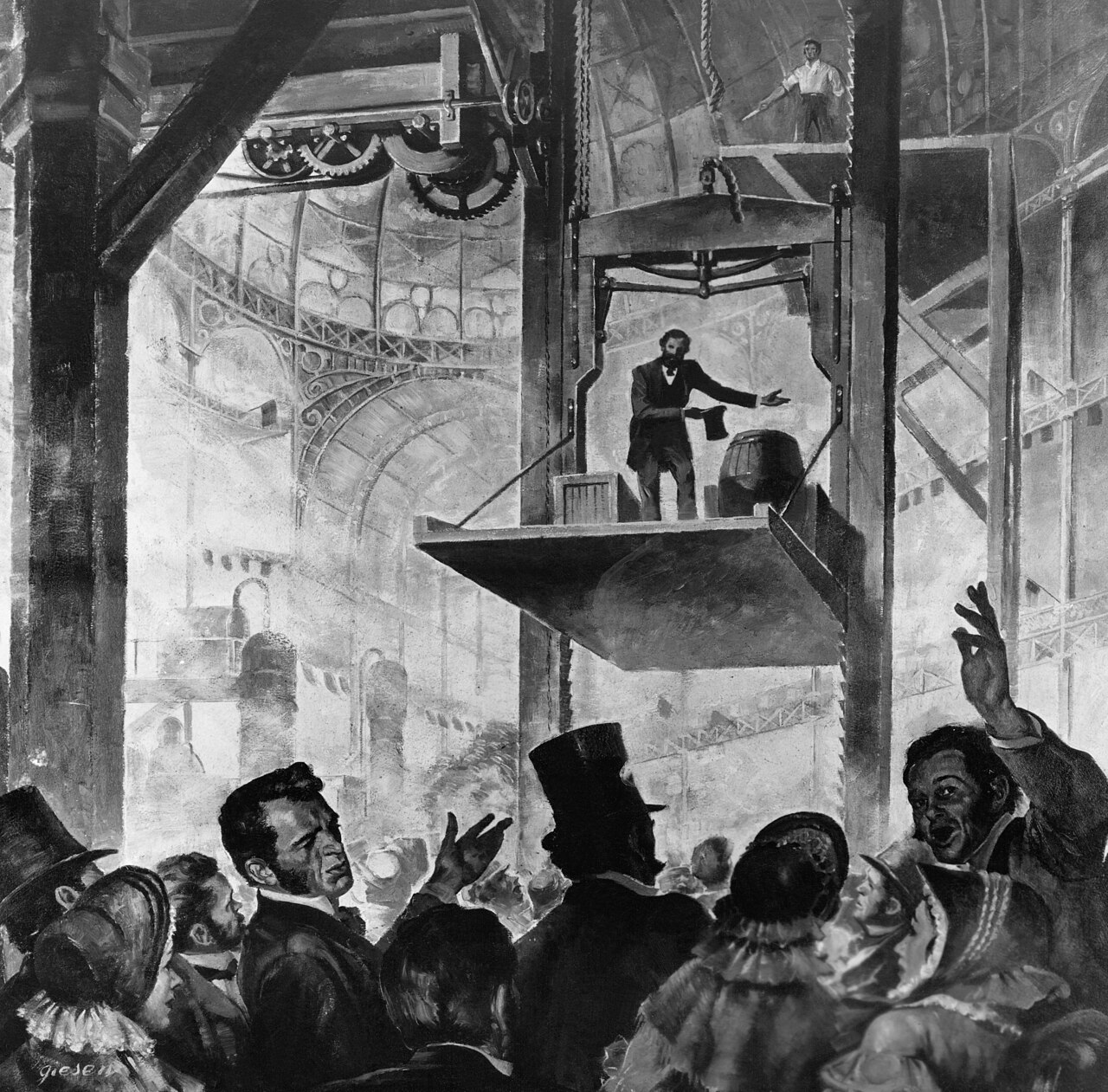
Elisha Otis's invention of the safety elevator in 1853 was a pivotal moment in urban development. Before his device, elevators were considered too dangerous for passenger use because a broken hoisting cable could cause a catastrophic fall. Otis's safety mechanism, which automatically halted the elevator if the rope broke, made passenger elevators viable. His public demonstration at the New York Crystal Palace in 1854, where he famously had the hoisting cable cut while he stood on the platform, proved the device's reliability and sparked commercial demand. The installation of the first safety elevator for passenger service in the E. V. Haughwout Building in 1857 marked the beginning of the modern elevator industry. Otis's company, the Otis Elevator Company, became a global leader in vertical transportation. The term 'escalator' was later coined by an Otis Elevator Company worker. The company was acquired by United Technologies in 1976 and spun off as an independent company in April 2020. A World War II Liberty ship, the SS Elisha Graves Otis, was named in his honor. Otis's legacy is the safe, efficient movement of people and goods in tall buildings, enabling the skyscrapers that define modern cities.
Did You Know?
- Elisha Otis invented a railway safety brake before inventing the safety elevator.
- He installed the first safety elevator for passenger service on March 23, 1857, in the E. V. Haughwout Building in New York City.
- The term 'escalator' was coined by an Otis Elevator Company worker.
- A World War II Liberty ship, the SS Elisha Graves Otis, was named after him.
The Safety Mechanism
In the early 1850s, vertical transport in buildings remained a rough and dangerous affair. Steam-driven lifts had served mines and factories since the mid-nineteenth century, and by 1850 Henry Waterman in New York had introduced a standing rope control system. Yet none of these machines addressed the most terrifying risk: what would happen if the lifting cable snapped? In 1852, Elisha Otis answered that question by introducing a safety elevator—a device engineered to catch the cab and prevent a free-fall should the cable part. This was not a minor refinement; it was the missing piece that made passenger elevators conceivable. Before Otis, the technology had progressed from hemp-rope cabs powered by animals in antiquity, through Ivan Kulibin's screw-drive mechanisms in Russian palaces in the 1790s, to the belt-and-counterweight Teagle of 1835 and Sir William Armstrong's hydraulic cranes of 1846. Each step added power or convenience, but none guaranteed that a person inside the car would survive a mechanical failure. Otis's safety mechanism changed the fundamental equation, transforming the elevator from a freight tool into a viable means of carrying human beings between floors.
The Crystal Palace Demonstration
Introducing a new safety device on paper is one thing; convincing a skeptical public is another. In 1854, Elisha Otis chose the most theatrical stage available to him: the New York exposition held in the Crystal Palace. There, before a gathered crowd, he staged what can only be described as a death-defying presentation. He demonstrated his safety elevator in a manner that put his own life at risk, proving in real time that the mechanism would indeed arrest the cab's descent if the cable were to break. The spectacle was deliberate. Otis understood that the elevator's future depended not on engineering specifications but on public trust, and no amount of technical documentation could substitute for watching a man stand on a platform as the rope was cut. The demonstration converted abstract engineering into visceral proof. Spectators who had previously regarded elevators as curiosities or tourist attractions—like the 'ascending room' Burton and Homer had operated in London in 1823—saw instead a mechanism that could be trusted with their lives. That trust, forged in a single dramatic afternoon, became the foundation upon which the entire passenger elevator industry was built.
From Demonstration to Daily Commute
The gap between a public demonstration and a working installation in a building is where many inventions stall. For Otis, that gap was bridged in a remarkably short span. Just three years after his Crystal Palace presentation, on 23 March 1857, the first safety passenger elevator was installed at 488 Broadway in New York City. The timing was no accident. Four years earlier, in 1853, construction had begun on Peter Cooper's Cooper Union Foundation building, and Cooper, betting that a safe passenger elevator would soon be invented, had included a cylindrical elevator shaft in the architectural plans. When Otis's technology arrived, he designed a special elevator tailored to that shaft. The Broadway installation and the Cooper Union commission together signaled a shift: elevators were no longer novelties for tourists or industrial tools for hauling coal and lumber from hillsides. They were becoming a standard feature of urban architecture. By 1870, the Equitable Life Building in New York was regarded as the first office building to incorporate passenger elevators, confirming that Otis's 1852 invention had moved from a single dramatic proof into the everyday fabric of city life.
The Otis Name in the Industry
Elisha Otis's personal contribution was a single, decisive mechanism, but the name he attached to it grew into something far larger. By the time Frank Sprague had refined electric elevator technology—adding floor control, automatic operation, acceleration control, and further safety devices that made his cars faster and capable of larger loads than hydraulic or steam predecessors—584 of his elevators had been installed across the country. In 1895, Sprague sold his company to the Otis Elevator Company, folding a generation of electric innovation into the brand that had been built on a 1850s safety catch. The broader trajectory Otis set in motion is visible throughout the history of vertical transport: from the roughly 25 animal-powered elevators in the Roman Colosseum, each carrying about 600 pounds up 23 feet, to the smart multi-elevator coordination systems in modern skyscrapers. Otis never lived to see electric traction or hydraulic pistons, but the principle he demonstrated in 1854—that a passenger must be able to trust the machine with their life—remains the non-negotiable foundation of every elevator that has followed.
Gallery
Frequently Asked Questions
Who is Elisha Otis?
Elisha Graves Otis was an American industrialist and inventor born in Vermont on August 3, 1811. He is best remembered as the man who created the safety mechanism that made passenger elevators safe enough for public use, and he founded the company that still operates under the Otis name today.
What exactly did Elisha Otis invent?
Otis designed a safety device that automatically engages and halts an elevator car if its hoisting cable breaks, preventing the car from plummeting. This simple but brilliant brake system turned elevators from dangerous novelty rides into a practical means of vertical transportation.
When and where was the first public safety elevator installed?
Otis put the first passenger elevator with his safety mechanism into public service in 1857 inside a New York City store. That installation proved to the public that a snapped cable no longer meant a fatal fall, and it kicked off the modern elevator era.
Why is Elisha Otis important to everyday life?
Before his safety brake, tall buildings were impractical because people had no safe way to travel between floors. By solving the falling-cable problem, Otis made multi-story commercial and residential architecture viable, reshaping how cities are built and how people move through them.
How did Elisha Otis's life end?
Otis died on April 8, 1861, at the age of forty-nine, just a few years after his 1857 New York demonstration put his invention on the world stage. Despite his short life, the company he founded and the safety principle he devised continue to protect elevator riders around the globe.
More in Inventors Of Everyday Objects 1-24
Spotted an error? Know more?
This is a living reference — every entry is fact-audited, and reader corrections feed straight into our audit queue. Suggest an edit · See this site's audit record