
Elias Howe
The man who stitched together the modern sewing machine

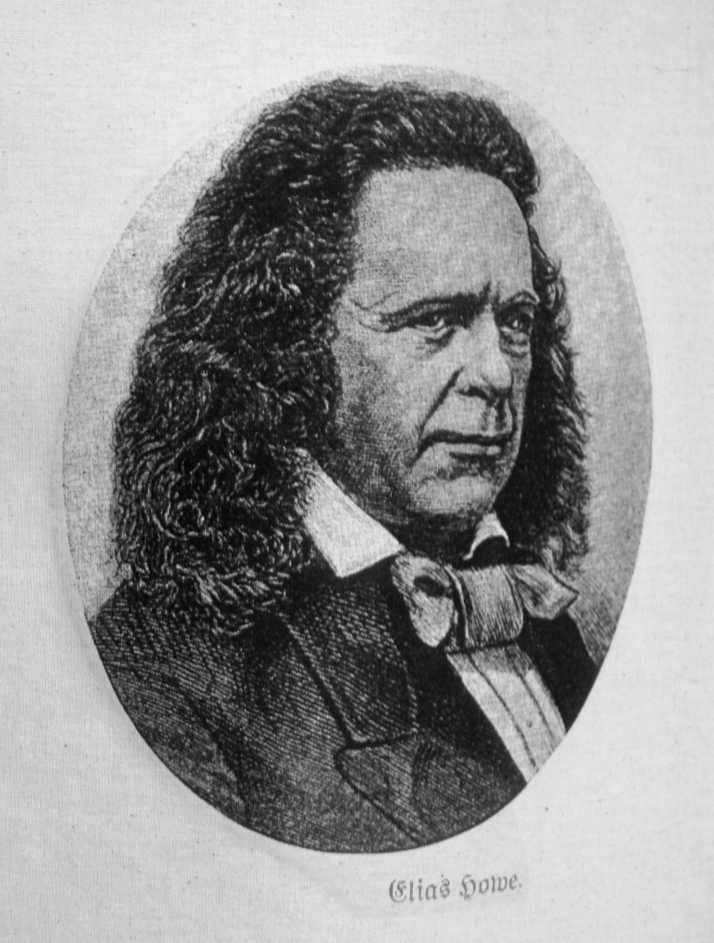
Unknown author · Public domain
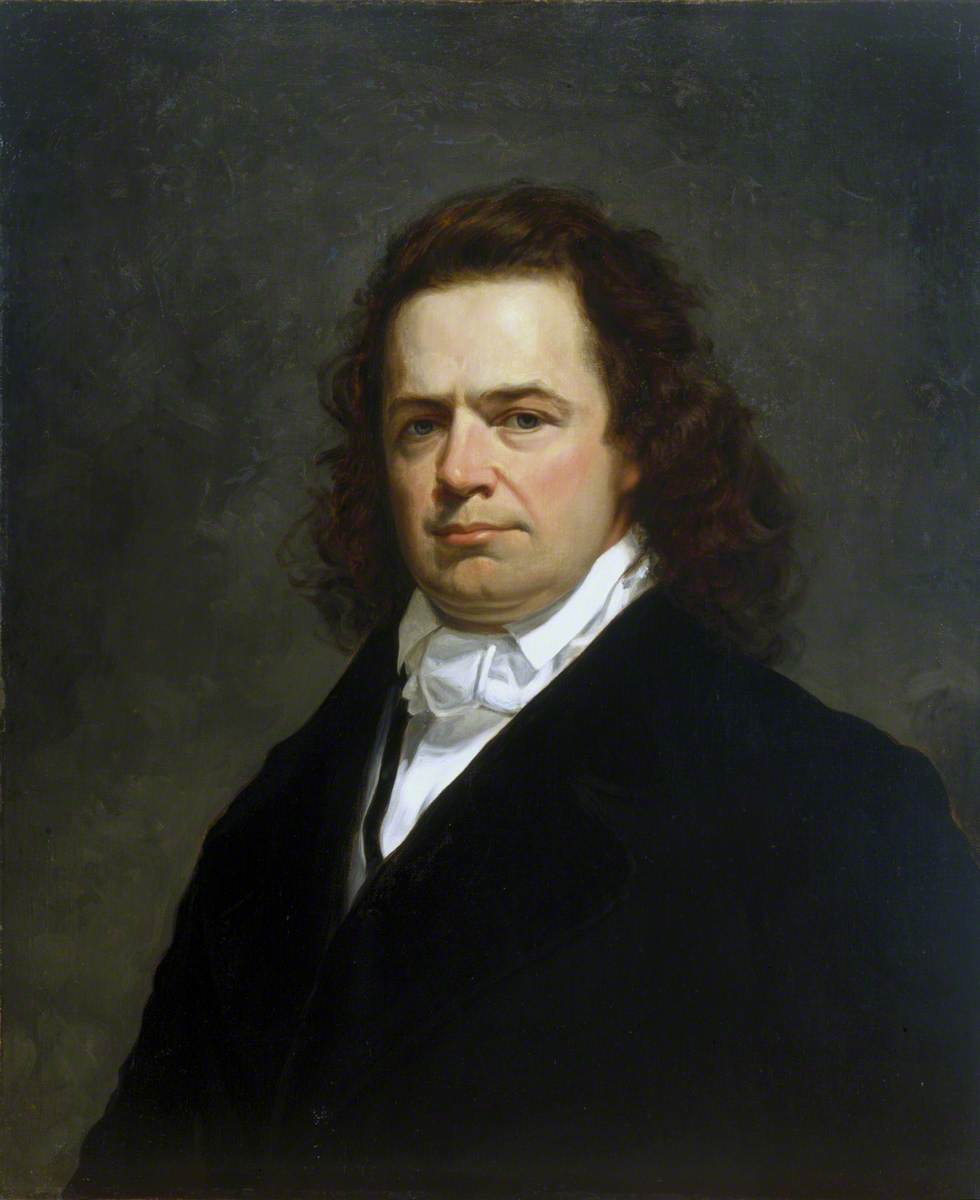
Elias Howe Jr. was born on July 9, 1819, in Spencer, Massachusetts, to Dr. Elias Howe Sr. and Polly Bemis Howe. He spent his early years in Massachusetts, apprenticing in a textile factory in Lowell starting in 1835. After the mill closings caused by the Panic of 1837, he moved to Cambridge, where he worked as a mechanic with carding machinery alongside his cousin Nathaniel P. Banks. In early 1838, he began an apprenticeship in the shop of Ari Davis, a master mechanic who specialized in precision instruments like chronometers. It was while working for Davis that Howe first conceived of the sewing machine.
Howe married Elizabeth Jennings Ames on March 3, 1841, in Cambridge. The couple had three children: Jane Robinson Howe, Simon Ames Howe, and Julia Maria Howe. After Elizabeth’s death, he later married Rose Halladay.
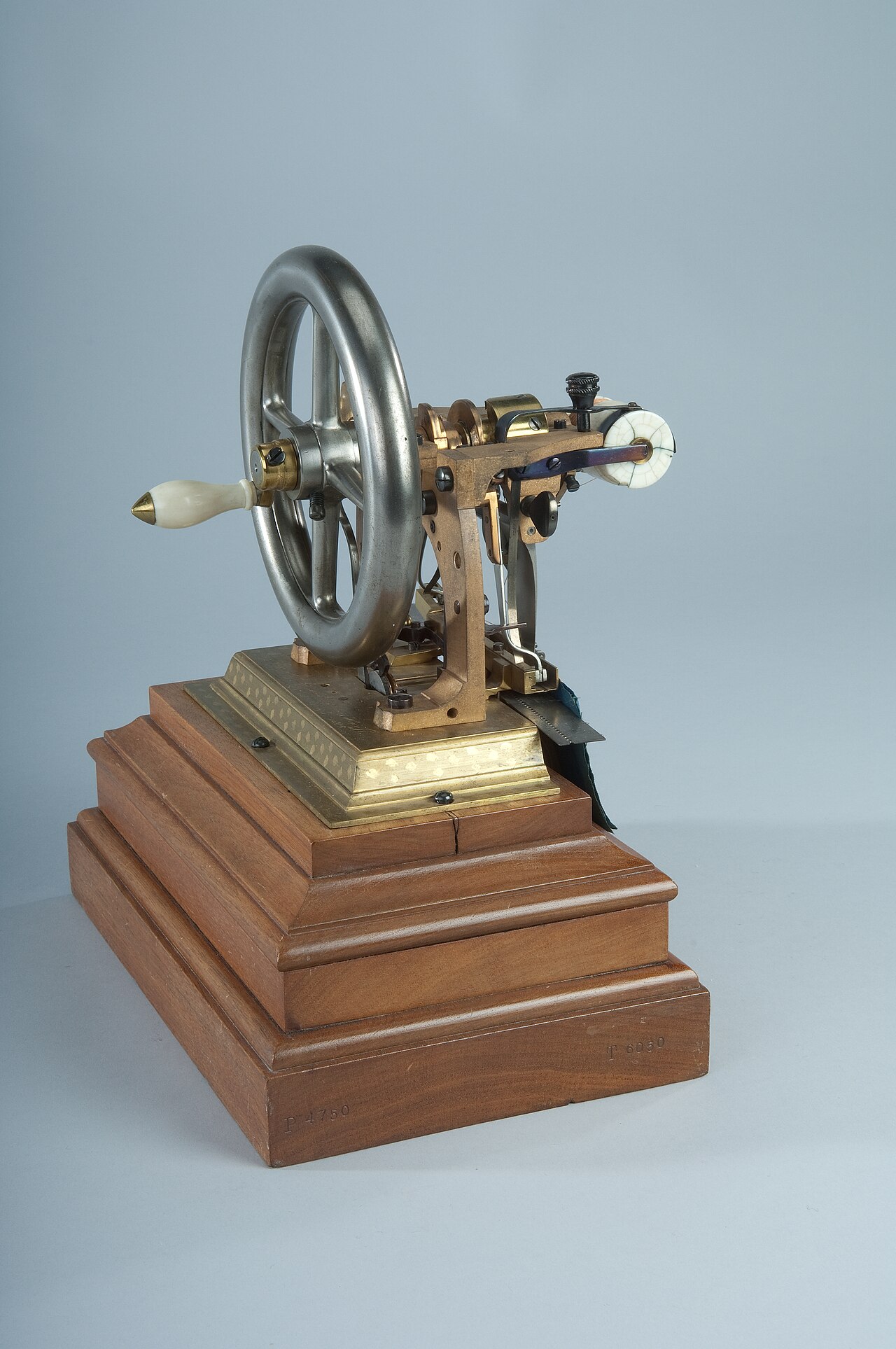
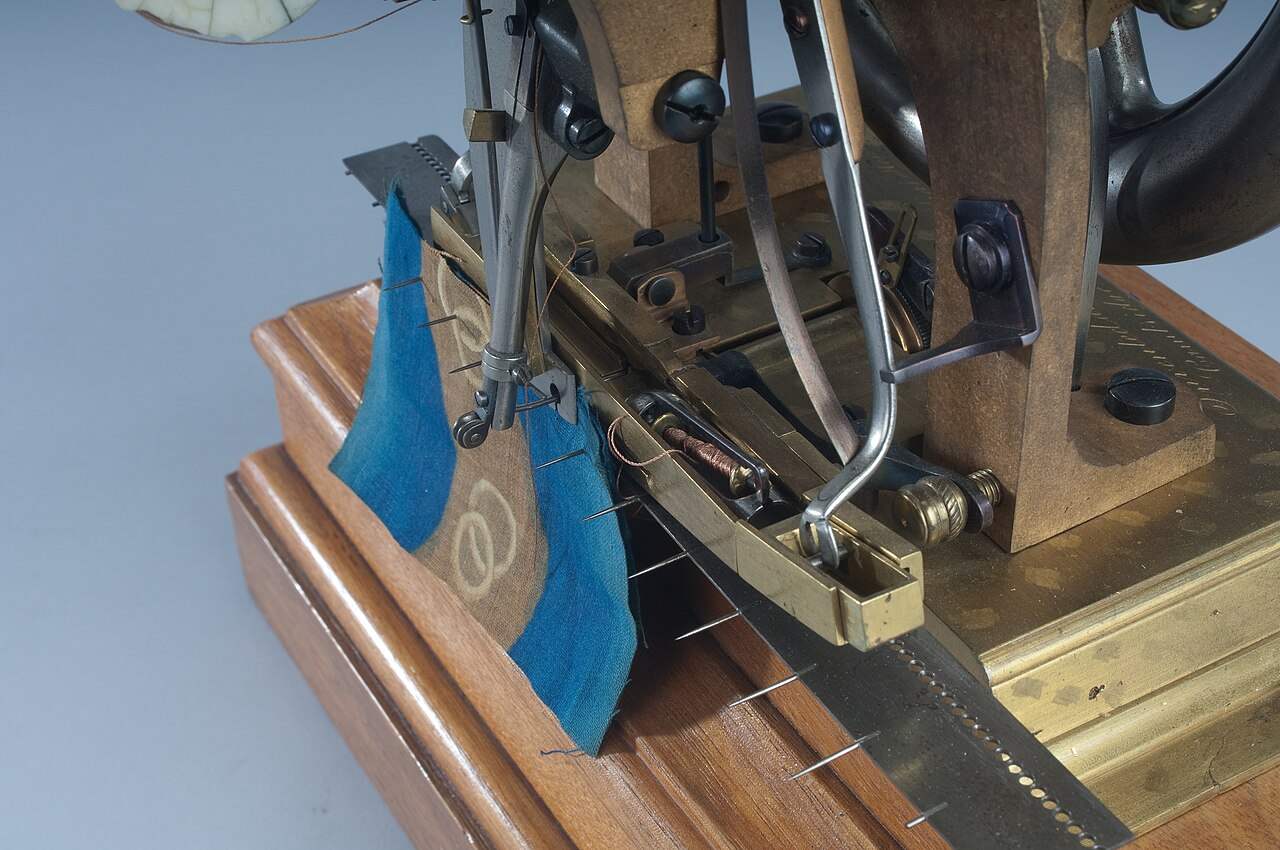
Though others had envisioned sewing machines before him—some as early as 1790, with working models and patents already in existence—Howe introduced key refinements. On September 10, 1846, he received the first U.S. patent (No. 4750) for a lockstitch sewing machine. His design included three features still found in modern machines: a needle with the eye at the point, a shuttle operating beneath the cloth to form the lockstitch, and an automatic feed.
A possibly apocryphal story from his mother’s family history describes how Howe arrived at the needle’s eye placement. According to the tale, he had nearly bankrupted himself trying to solve the problem. He dreamed he was building a sewing machine for a savage king, who gave him twenty-four hours to finish it or face execution. In the dream, he noticed warriors carrying spears pierced near the head, which gave him the idea. He woke at 4 a.m., rushed to his workshop, and by 9 a.m. had crudely modeled a needle with the eye at the point.
After securing his patent, Howe struggled to find U.S. investors. His elder brother, Amasa Bemis Howe, traveled to England in October 1846 and sold the first machine for £250 to William Thomas, a London manufacturer of corsets, umbrellas, and valises. Elias and his family joined Amasa in London in 1848, but after business disputes with Thomas and his wife’s failing health, Howe returned to the United States nearly penniless. Elizabeth died shortly after their return to Cambridge in 1849.
While Howe tried to market his machine, other entrepreneurs began manufacturin
- born
- July 9, 1819, Spencer, Massachusetts
- died
- October 3, 1867, of gout and a massive blood clot
- field
- Invention, mechanics
- nationality
- American
- known_for
- Inventing the modern lockstitch sewing machine
Lore & Background
Elias Howe Jr. was born on July 9, 1819, to Dr. Elias Howe Sr. and Polly Bemis Howe in Spencer, Massachusetts. He spent his childhood and early adult years in Massachusetts, apprenticing in a textile factory in Lowell beginning in 1835. After mill closings due to the Panic of 1837, he moved to Cambridge, Massachusetts, to work as a mechanic with carding machinery, apprenticing along with his cousin Nathaniel P. Banks. In early 1838, he apprenticed in the shop of Ari Davis, a master mechanic in Cambridge who specialized in chronometers and precision instruments; it was there that Howe seized upon the idea of the sewing machine. He married Elizabeth Jennings Ames on March 3, 1841, in Cambridge, and they had three children. After her death, he married Rose Halladay.
Howe was not the first to conceive of a sewing
Reader's Guide
Elias Howe's significance lies in his patent for the modern lockstitch sewing machine, which established the essential features still common to most sewing machines: a needle with the eye at the point, a shuttle for the lock stitch, and an automatic feed. Although he was not the first to conceive of a sewing machine, his refinements and successful patent defense against Isaac Singer and others secured his place in history. His legal victory from 1849 to 1854 forced competitors to pay royalties, making him a multi-millionaire. Howe's legacy includes the Howe Sewing Machine Co., which won a gold medal at the London Exhibition of 1862, and his own Howe Machine Co. in Bridgeport, Connecticut. His sewing machine won a gold medal at the Paris Exhibition of 1867, and he was awarded the Légion d'honneur by Napoleon III that same year. He was commemorated with a 5-cent stamp in the Famous American Inventors series issued October 14, 1940, and the 1965 Beatles movie Help! is dedicated to his memory. In 2004, he was inducted into the United States National Inventors Hall of Fame.
Did You Know?
- Howe's patent for the sewing machine (U.S. patent 4750) was awarded on September 10, 1846.
- A possibly apocryphal account says Howe dreamed of warriors with spears pierced near the head, inspiring him to place the eye of the needle at the point.
- Howe received a patent in 1851 for an 'Automatic, Continuous Clothing Closure,' an early precursor to the zipper.
- The 1965 Beatles movie Help! is dedicated to Elias Howe's memory.
The Constitutional Bedrock of American Inventorship
Long before any single device rolled off a workbench, the architects of the republic embedded a specific promise into the nation's governing document. Article I, Section 8, Clause 8 of the Constitution grants Congress the enumerated authority to advance science and useful arts by granting authors and inventors an exclusive, time-limited right to their writings and discoveries. This single clause became the legal spine for every subsequent patent statute, ensuring that the person who first conceived an original invention could claim a protected window of commercial exclusivity. The language was deliberately broad, covering not just mechanical contraptions but any original discovery, and it established a principle that would echo through centuries of American innovation: the state's role is to incentivize creation by temporarily shielding the creator's economic interest. Every patent application filed at the USPTO traces its legitimacy back to this eighteenth-century commitment, making the clause one of the most consequential sentences in the entire constitutional text for the world of technology and commerce.
From Colonial Grants to a Modern Patent Office
The trajectory of American patent law stretches from a modest 1641 decree by the General Court of Massachusetts, which awarded Samuel Winslow a right to a novel salt-making method, all the way to the codified statutes of Title 35 in the United States Code. President Washington's signature on the Patent Act of 1790 opened the door to federal protection for any useful art, engine, or device not previously known, and within a month Samuel Hopkins of Vermont secured the very first federal patent for an improved pot-and-pearl-ash process. The 1836 act was a watershed: it created a dedicated patent office, standardized application processing, and set a fourteen-year term extendable by seven. Two centuries later, the Uruguay Round Agreements Act of 1994 reset the term to twenty years for applications filed after June 1995, aligning American practice with international norms. Between 1836 and 2011, the USPTO issued nearly seven and a half million patents, a staggering tally that underscores how deeply the institution wove itself into the fabric of American economic life.
Benjamin Franklin's Unlikely Catalog of Inventions
Few figures in early American history matched Benjamin Franklin's breadth of practical ingenuity. In 1717 he fashioned wooden swim fins roughly ten inches long and six inches wide, shaped like lily pads or a painter's palette, designed to be strapped to the hands rather than the feet to add propulsion to each stroke. Four decades later he introduced the circulating stove, a metal-lined fireplace with rear baffles that redirected hot air and cut smoke, gradually displacing open hearths across the Thirteen Colonies. In 1744 he is credited with conceptualizing mail-order cataloging, using the postal system to solicit and deliver merchandise to distant customers. His most celebrated contribution, the pointed lightning rod, emerged around 1749 when he concluded that lightning and electricity were the same phenomenon; by 1752 his famous kite experiment, witnessed by his son William, confirmed the theory. Franklin also designed a flexible urinary catheter in 1752, replacing rigid wooden or animal-skin predecessors. His posthumous induction into the International Swimming Hall of Fame remains a fitting nod to a man who treated every problem as an engineering challenge.
The Octant: A Tale of Simultaneous Discovery
In 1730, a Philadelphia glazier named Thomas Godfrey and, independently, the English mathematician John Hadley each arrived at the same elegant solution to a navigation problem: a reflecting instrument that used mirrors to double the measured angle, allowing a mere one-eighth circle of arc to determine a full quadrant. The device, which let sailors measure the angle between the horizon and a celestial body with far greater precision than older quadrants, was initially called Hadley's quadrant after the Englishman, even though Godfrey held an equally legitimate claim. Over time the name shifted to octant, honoring the American inventor's original terminology. The story of the octant became an early and vivid illustration of a recurring theme in innovation history: two minds, separated by the Atlantic, solving the same geometric puzzle in the same year. It also foreshadowed the legal and philosophical questions about priority and independent invention that would later become central to patent law, questions that the 1790 and 1836 acts would attempt to resolve within a formal institutional framework.
Gallery
Frequently Asked Questions
Who is Elias Howe?
Elias Howe Jr. (1819–1867) was an American inventor and precision mechanic from Spencer, Massachusetts, best known for creating the lockstitch sewing machine. He trained in textile mills and instrument workshops before developing the design that transformed garment production.
What did Elias Howe invent?
He patented the lockstitch sewing machine, a device that interlocks two threads—one fed by the needle and one by a bobbin—to form a secure stitch on both sides of the fabric. This mechanism became the structural backbone of virtually every sewing machine manufactured since the 1840s.
How did Elias Howe come up with the sewing machine idea?
Working as a precision mechanic in the shop of Ari Davis in the late 1830s, Howe began sketching a machine that could automate the stitching process. He later described a vivid dream in which captors forced him to stitch using a needle whose eye was pointed like a spear, which inspired the hook-and-thread concept central to his design.
Why is Elias Howe important to the history of invention?
His 1846 lockstitch patent made mechanical sewing dramatically faster and more uniform than hand-stitching, accelerating the growth of the ready-made clothing industry. The principle he established still underpins the core operation of modern sewing machines more than 175 years later.
How did Elias Howe die?
Howe died on October 3, 1867, at age 48, after a prolonged bout of gout culminated in a massive blood clot. His passing came in the midst of years of bitter patent litigation that had made his name one of the most contested in American intellectual-property history.
More in Inventors Of Everyday Objects 1-24
Spotted an error? Know more?
This is a living reference — every entry is fact-audited, and reader corrections feed straight into our audit queue. Suggest an edit · See this site's audit record