
Cyrus McCormick
Inventor and businessman who developed the mechanical reaper.

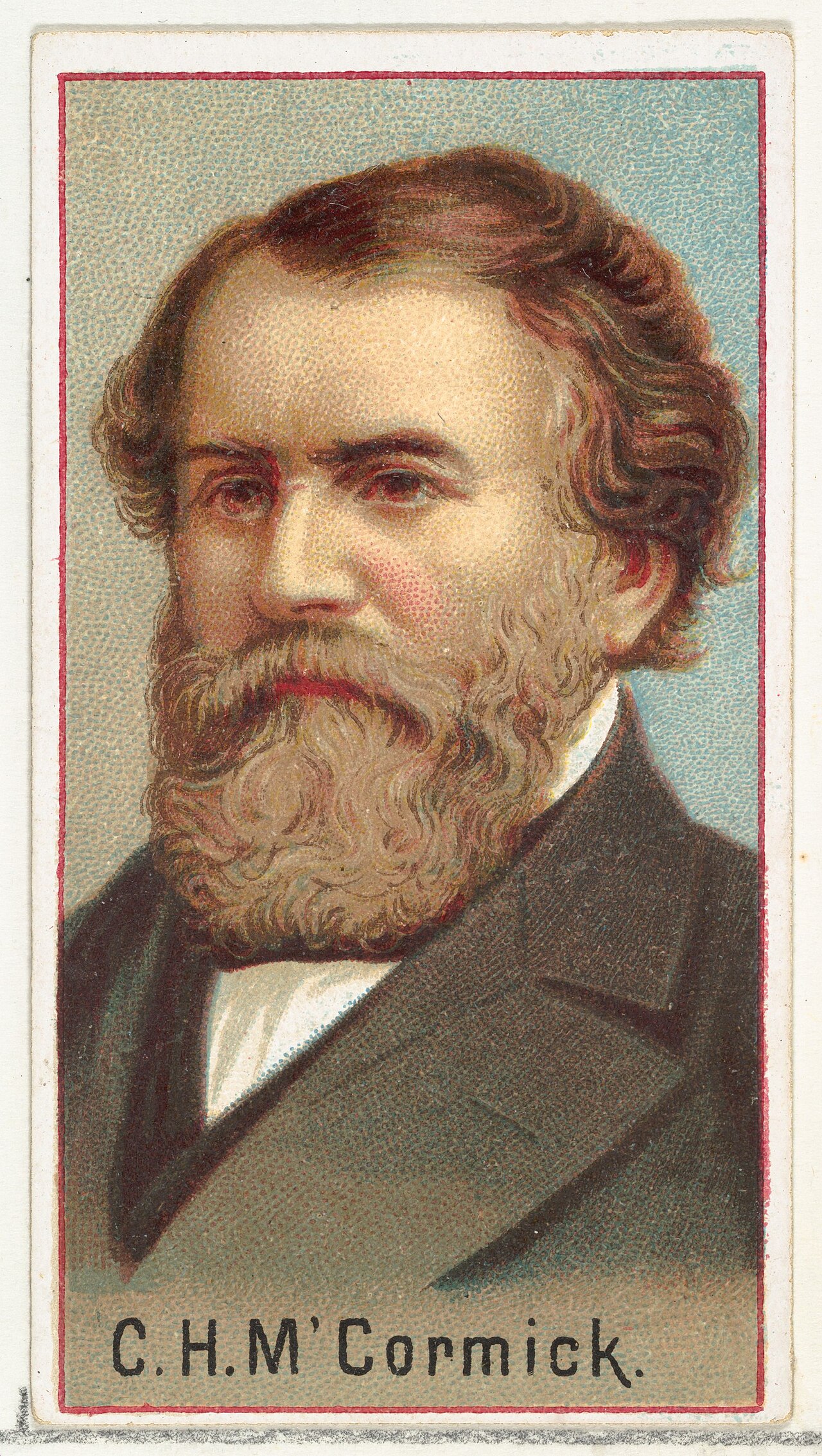
Allen & Ginter · CC0
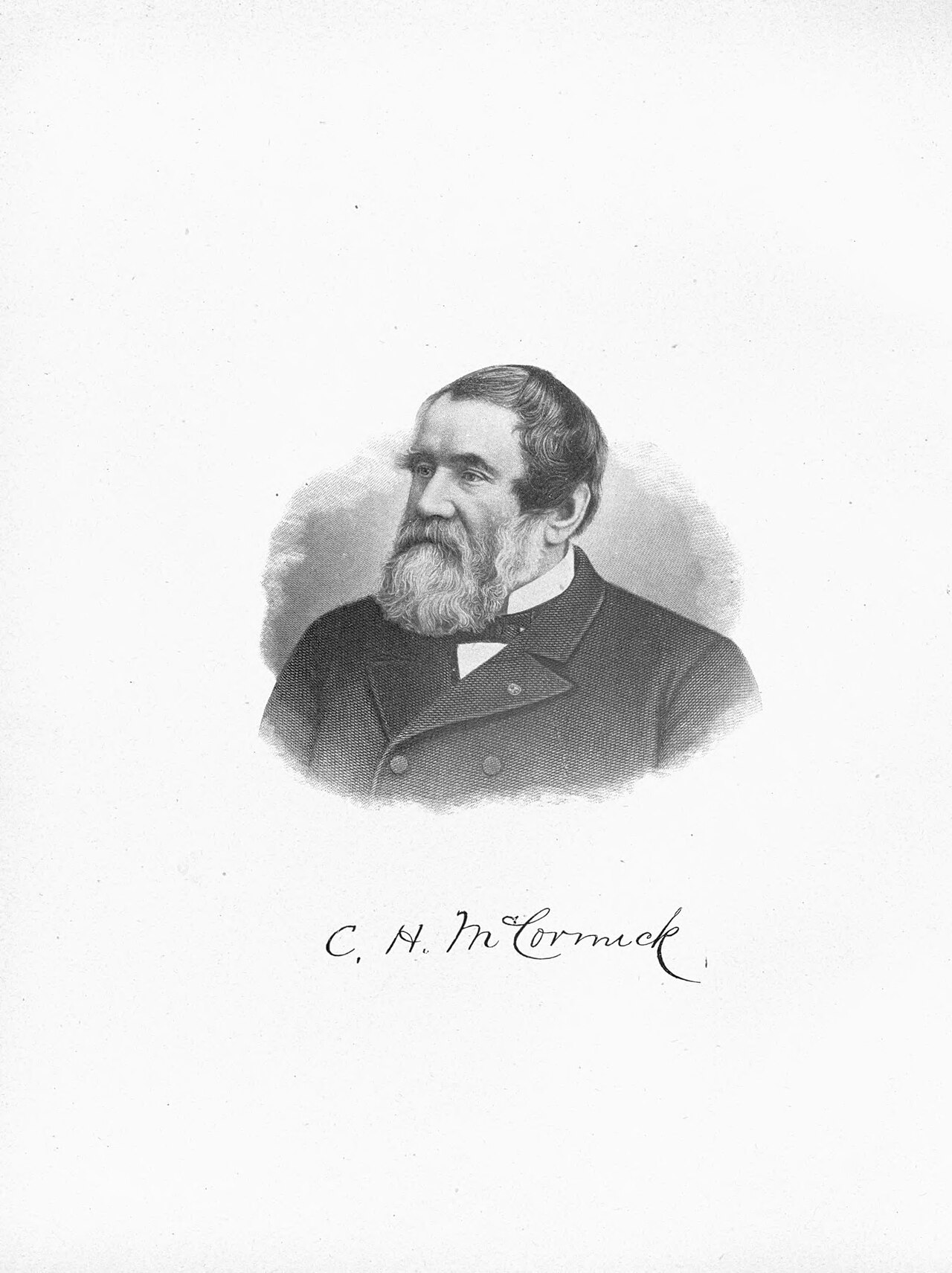
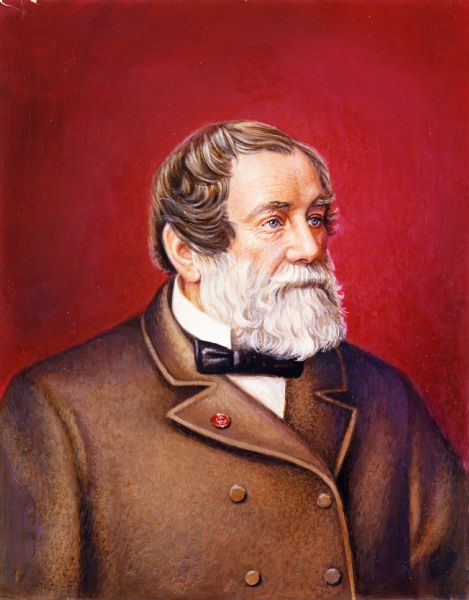
Cyrus Hall McCormick (February 15, 1809 – May 13, 1884) was an American inventor and businessman. He founded the McCormick Harvesting Machine Company, which later merged into the International Harvester Company in 1902. Though he often took sole credit for inventing the mechanical reaper, he was actually one of several engineers who created working versions in the 1830s. His work built on over twenty years of effort by his father, Robert McCormick Jr., who was assisted by Jo Anderson, an enslaved African-American man owned by the family. McCormick also built a successful company with strong manufacturing, marketing, and a sales force to sell his products.
Born in Raphine, Virginia, on February 15, 1809, Cyrus was the oldest of eight children. His father, Robert McCormick Jr., saw promise in a mechanical reaper design and tried to patent it as his own. Robert worked for 28 years on a horse-drawn reaper but never made a reliable version. Cyrus took over the project, with help from Jo Anderson. At the time, a few unpatented machines based on Patrick Bell’s Scottish design were in the U.S.; those were pushed by horses, while McCormick’s was pulled by horses and cut grain to one side. Cyrus demonstrated an early reaper in 1831 at Steeles Tavern, Virginia, and claimed he perfected the design in 18 months. He got a patent for it on June 21, 1834, two years after patenting a self-sharpening plow. But no machines sold because they couldn’t handle different field conditions.
The McCormick family also ran a blacksmith and metal-smelting business. The panic of 1837 nearly bankrupted them when a partner withdrew. In 1839, Cyrus began more public reaper demonstrations, but local farmers still found the machine unreliable. He sold one reaper in 1840 and none in 1841. Using an endorsement from his father’s first customer, Khane Axel Hale, for a machine built by McPhetrich, Cyrus kept improving the design. He sold seven reapers in 1842, 29 in 1843, and 50 in 1844, all built by hand in the family shop. He received a second patent for improvements on January 31, 1845. As word spread, orders came from farther west, where farms were larger and land flatter. While in Washington, D.C., for his 1845 patent, he learned of a factory in Brockport, New York, and contracted for mass production. He also licensed others to build the reaper, but poor quality from some licensees hurt the
- born
- February 15, 1809, Raphine, Virginia
- died
- May 13, 1884
- field
- Inventor, businessman
- nationality
- American
- known_for
- Mechanical reaper; founder of McCormick Harvesting Machine Company
Lore & Background
Cyrus McCormick was born on February 15, 1809, in Raphine, Virginia, the eldest of eight children. His father, Robert McCormick Jr., worked for 28 years on a horse-drawn mechanical reaper but never produced a reliable version. Cyrus took up the project aided by Jo Anderson, an enslaved African-American man. He held one of his first demonstrations in 1831 at Steeles Tavern, Virginia, and was granted a patent on the reaper on June 21, 1834. Early sales were slow; he sold one reaper in 1840 and none in 1841, but by 1844 he sold 50. In 1847, after his father's death, Cyrus and his brother Leander moved to Chicago, where they established a factory. The factory survived the Great Chicago Fire of 1871, as it was located outside the burned area, and continued operations.
Reader's Guide
Cyrus McCormick's significance lies in his role in the development and commercialization of the mechanical reaper, which transformed grain harvesting and contributed to agricultural expansion in the American Midwest and West. Though he claimed sole credit as the inventor, the source article notes he was one of several designing engineers, and his work built on his father's efforts and the assistance of Jo Anderson. McCormick's business acumen—including innovative marketing, a trained sales force, and field repair services—helped his reaper gain widespread adoption. His company became part of International Harvester in 1902, a major force in agricultural machinery. His legacy is also marked by legal controversies, including a patent infringement lawsuit against John Henry Manny, which Manny won on appeal to the U.S. Supreme Court. McCormick's outspoken opposition to Abraham Lincoln and the Republican party may have influenced patent decisions. His religious and political activism, including publishing editorials calling for reconciliation before the Civil War, further shaped his public profile.
Did You Know?
- McCormick's father, Robert McCormick Jr., worked for 28 years on a mechanical reaper but never produced a reliable version.
- Jo Anderson, an enslaved African-American man held by the McCormick family, aided Cyrus in developing the reaper.
- McCormick's factory burned down in the Great Chicago Fire of 1871 but was rebuilt and reopened in 1873.
- McCormick lost a patent infringement lawsuit against John Henry Manny, with the case going to the U.S. Supreme Court.
From Rinks to Recreation: The Site's Turbulent Past
The parcel of land that would become a beloved children's playground in Toronto's Little Portugal enclave had a restless commercial history before it found its final purpose. In 1896, business merchant Andrew Wheeler Green opened the Grand National Rink at 153 Brock Avenue, an open-air skating venue that operated until 1902. Six years after its closure, the northern portion of the grounds welcomed the Royal Alexandra Rink in January 1908, another open-air hockey facility. By that April, the rink and its adjoining property, together spanning roughly 1.2 hectares, had been converted into the grounds for a baseball field. The Brock Avenue Rink then took over the former Royal Alexandra site in December 1909, and plans were already underway to erect a permanent indoor hockey arena for the Toronto Professional Hockey Club the following year. Those ambitions died when the Canadian Hockey Association dissolved on January 15, 1910, and the last recorded skating event on the property took place in March of that same year. By November 1910, the grounds were sold and broken up into residential housing lots, leaving the site in limbo until a new vision for public recreation emerged.
Mary McCormick and the Birth of a Playground
The park bears the name of Mary Virginia McCormick, eldest daughter of American inventor Cyrus Hall McCormick and a Toronto resident whose generosity reshaped the recreational landscape of the city's western end. On September 7, 1910, she contributed CA$10,000 to the Toronto Playgrounds Association, an advocacy organization established in 1908 whose members collaborated with the municipal parks department to create children's playgrounds across Toronto. The association had initially selected Cottingham Square, a 0.7-hectare municipal park near Mary's own home, as the playground site, but abandoned that location because it sat too close to the Canadian Pacific Railway line. With the former rink and baseball grounds on Brock Avenue sold and subdivided in November 1910, Toronto City Council stepped in the following month, purchasing 1.1 hectares for $34,000 specifically to establish a playground in the city's west. On March 3, 1911, the association accepted this new parcel, and Mary pledged an additional $5,000 to outfit the facility. Her giving continued steadily, and by September 1912 her cumulative donations had reached $25,000, a sum that anchored the playground's early operations.
A Pioneering Recreation Centre
When McCormick Playground opened with a public celebration on July 1, 1911, it brought an array of amenities to the neighbourhood: climbing ladders, glider chairs, merry-go-rounds, sandboxes, seesaws, slides, swings, a large wading pool, and seasonal ice rinks for hockey and skating. As the third supervised playground on municipal property—following St. Andrew's Playground on Adelaide Street in 1909 and Osler Playground on Argyle Street in 1910—it distinguished itself by emulating the model of the Chicago South Park Commission to become the association's first playground with a year-round indoor recreation centre. The McCormick Recreation Centre, a Georgian Revival building at 163 Brock Avenue, was inaugurated with a public festival on September 21, 1912, attended by Mayor George Reginald Geary and Mary's mother, Nancy Fowler McCormick. Its main hall seated 300 guests, and the building also housed committee rooms and shower baths. It held the distinction of being the first year-round recreation centre in Canada and the largest permanent one in Toronto. The Toronto Playgrounds Association managed the facility until June 1913, when stewardship passed to the Toronto Parks Department. In July 1914, the Toronto Public Health Department established an infant clinic within the centre, one of ten such clinics citywide where mothers brought their babies for medical care.
Community, War, and Enduring Legacy
The recreation centre became a vital hub for the surrounding community, especially during the First World War. Mary McCormick and her Canadian-born nursing companion, Grace Thorne Walker, organized Christmas pageants for 400 children and their parents in the main hall in both 1917 and 1918. By 1919, the centre displayed an honour roll listing the names of 162 of its men who had been recruited into the war effort. The facility's popularity was remarkable: in 1921 it drew 118,229 children, the highest attendance among all 33 municipal recreation centres that year, which collectively served over a million young visitors. In 1933, a total of 183,444 adults and children registered at the centre, representing the largest share of the 2,018,509 visitors across the city's network. The park's footprint expanded in 1957 when City Council acquired an additional 0.41 hectares for $125,000. After the Toronto Housing Authority opened the nearby McCormick Park Apartments at 1525 Dundas Street West in 1960, construction of a second recreation centre and an artificial ice rink began in 1963. That year the site was formally renamed McCormick Park at 66 Sheridan Avenue, where it endures as a 1.5-hectare municipal park featuring a baseball diamond, basketball courts, a wading pool, and a children's playground.
Gallery
Frequently Asked Questions
Who is Cyrus McCormick?
Cyrus Hall McCormick (1809–1884) was an American inventor and businessman born in Raphine, Virginia, best remembered for developing a practical mechanical grain reaper and building a dominant harvesting-machine company around it.
What did Cyrus McCormick invent?
He produced a working mechanical reaper in the 1830s that could cut standing grain far more quickly than a hand scythe, effectively automating one of the most labor-intensive steps of harvest.
How did Cyrus McCormick's story end?
He died on May 13, 1884, and the McCormick Harvesting Machine Company he founded went on to merge into International Harvester in 1902, outliving him by nearly two decades.
Why is Cyrus McCormick important?
His reaper cut harvest labor dramatically, helping shift American agriculture from hand-tool farming toward mechanized production, and his company became one of the largest industrial manufacturers of its era.
Did Cyrus McCormick invent the mechanical reaper all by himself?
Not quite; he was one of several engineers pursuing reaper designs in the 1830s, and his own work rested on more than twenty years of prior experimentation by his father, Robert McCormick Jr., with help from Jo Anderson, an enslaved man owned by the family.
More in Inventors Of Everyday Objects 1-24
Spotted an error? Know more?
This is a living reference — every entry is fact-audited, and reader corrections feed straight into our audit queue. Suggest an edit · See this site's audit record