Charles Wheatstone
English physicist and inventor of the Wheatstone bridge and telegraphy.

Peter Trimming · CC BY-SA 2.0
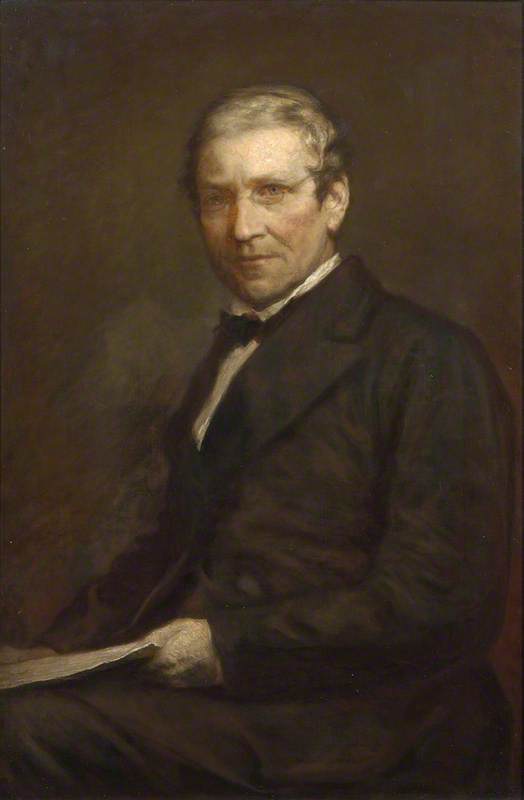
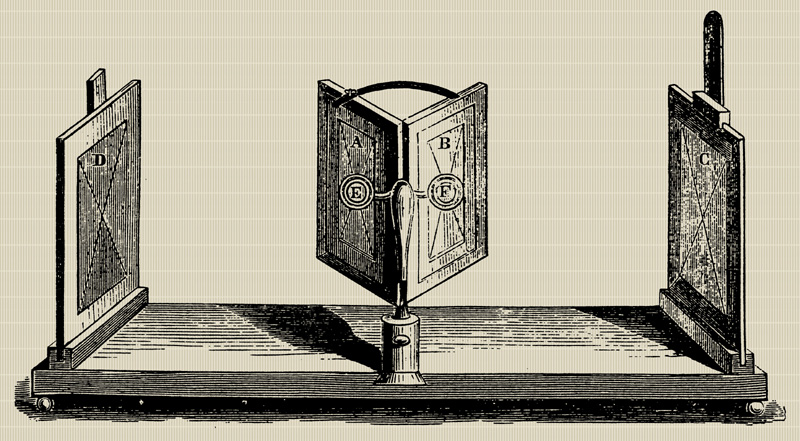
Sir Charles Wheatstone (6 February 1802 – 19 October 1875) was an English physicist and inventor. He is best known for his contributions to the development of the Wheatstone bridge, a device used to measure unknown electrical resistance, and for his major role in the development of telegraphy. His other notable inventions include the English concertina, the stereoscope for displaying three-dimensional images, and the Playfair cipher, an encryption technique.
- born
- 6 February 1802
- died
- 19 October 1875
- field
- Physics, invention
- nationality
- English
- known_for
- Wheatstone bridge, telegraphy, English concertina, stereoscope, Playfair cipher
Lore & Background
Charles Wheatstone was born in Westgate at Gloucester and christened in St Mary de Lode, though a later biography confused the location with his grandmother's house in Barnwood, Gloucestershire. His father was a music-seller and teacher of the flute. As a boy, Wheatstone was shy and sensitive, often retreating to an attic. At about fourteen, he was apprenticed to his uncle, a musical instrument maker, but showed little interest in handicraft, preferring to study books. At fifteen, he translated French poetry and wrote songs. He saved his pocket money to buy a volume on Volta's discoveries in electricity, written in French, and with his elder brother William repeated the experiments using a homemade battery, even using copper pennies as plates.
Reader's Guide
Wheatstone's significance lies in his diverse contributions to science and technology. The Wheatstone bridge, though originally invented by Samuel Hunter Christie, was developed and popularized by Wheatstone and remains a fundamental tool in electrical measurement. His work on telegraphy was pivotal, and he was knighted in 1868 after completing the automatic telegraph. He also invented the English concertina, a six-sided instrument with 64 keys, and the stereoscope for three-dimensional images. His early experiments on sound transmission, including the 'Enchanted Lyre' and a device he called a 'telephone,' anticipated later communication technologies. Wheatstone received numerous honors, including being a Fellow of the Royal Society, a foreign member of the Royal Swedish Academy of Sciences, and a Foreign Associate of the French Academy of Sciences. He died in Paris in 1875 from inflammation of the lungs and was buried in Kensal Green Cemetery.
Did You Know?
- Wheatstone's 'Enchanted Lyre' was a mimic lyre hung from the ceiling that emitted sounds from instruments played out of sight, using a steel rod to convey vibrations.
- He devised a simple instrument for augmenting feeble sounds called the 'Microphone,' which used two slender rods to convey mechanical vibrations to both ears.
- Wheatstone was knighted in 1868 primarily for his overall contributions to telegraphy and science.
- He was awarded the Ampere Medal by the French Society for the Encouragement of National Industry in 1873.
The Boy Who Learned in Silence
Thomas Edison was born on February 11, 1847, in Milan, Ohio, the seventh and last child of Samuel Ogden Edison Jr. and Nancy Matthews Elliott. By 1854 the family had moved to Port Huron, Michigan, where his mother, a former schoolteacher, became his primary educator. He attended formal school for only a few months; from then on, his learning came through books, especially a copy of A School Compendium of Natural and Experimental Philosophy and a set of Thomas Paine volumes that stayed in the household. At twelve, scarlet fever and recurring untreated middle-ear infections left him nearly deaf in one ear and barely hearing in the other. As an adult he reframed this loss as an advantage, insisting the silence let him focus without distraction. On the trains running between Port Huron and Detroit he sold newspapers, candy, and vegetables, clearing roughly fifty dollars a week by thirteen and funneling the profits into chemical and electrical supplies. He also founded the Grand Trunk Herald, a twenty-four-issue local paper with five hundred subscribers, a framed first issue of which he displayed in his home for the rest of his life.
From Telegraph Keys to the First Research Lab
Between 1863 and 1869 Edison held a string of night-shift telegraphy jobs across Ontario, Michigan, Kentucky, Ohio, and Massachusetts, working for Western Union and the Associated Press wire. In Cincinnati he formed a twenty-five-year friendship with Ezra Gilliland, and he joined the National Telegraph Union, contributing to its magazine. His reputation among fellow operators was that of a bright, restless tinkerer whose experiments sometimes disrupted actual work. In Boston he briefly profited from a stock ticker before losing the venture when he tried to expand it to New York. By twenty-two he had sold several early inventions and relocated to New York City to pursue engineering full-time. By twenty-nine he owned a telegraph recorder factory in Newark employing over a hundred workers. That expansion led to Menlo Park, now regarded as the first industrial research laboratory in the world. Known as "The Wizard of Menlo Park," Edison pushed his staff to the point of exhaustion and drove both investment and publicity relentlessly. The phonograph, which took years to become commercially viable, launched him into international fame, and he later built an even larger laboratory in West Orange, New Jersey.
The War of Currents and a Nation of Light
In 1878 Edison turned his attention to an electrical lighting system designed to displace the ubiquitous gas lamp. The journey from a single filament bulb to a functioning national grid demanded decades of invention, capital, and political influence. Edison and his colleagues positioned themselves to grow enormously wealthy as they designed and built networks of light bulbs, generators, and distribution infrastructure across the country. Yet the rivalry with George Westinghouse's alternating-current system ultimately forced Edison to concede the technology war. The commercial fallout led to the merger of his Edison General Electric Company with the rival Thomson-Houston Electric Company, birthing General Electric. Alongside this electrical empire, Edison simultaneously launched a mining venture that never turned a profit and nearly dragged him into bankruptcy. As his role in the illumination business waned, he pivoted to a cement company and began developing a motion picture camera that would evolve into the first movie production studio. Over his career he registered 1,093 patents in the United States.
A Life of Neglect, Chemistry, and Rubber
Edison's personal life was marked by distance and loss. He fathered three children with his first wife, Mary, but was neglectful toward them; she died at twenty-nine, and his relationships with their children remained strained for the rest of his life. He met Mina while traveling the United States and Europe to promote his innovations, married her, and had three more children, again showing little paternal warmth. Only in their adulthood did he begin taking an interest in his sons, and they eventually joined his companies. Charles Edison ultimately assumed control of the family business after his father's death. Edison's health was compromised by decades of handling toxic and radioactive chemicals in his experiments, compounded by a lifelong battle with diabetes. Yet he worked vigorously until the day he died on October 18, 1931. His later enterprises spanned batteries, movies, musical records, and phenol production, but his final obsession was finding a method for domestic rubber production in America.
Gallery
Frequently Asked Questions
Who is Charles Wheatstone?
Charles Wheatstone was an English physicist and inventor born in 1802 who died in 1875. He is remembered for pioneering work in electrical measurement, long-distance communication, and visual technology.
What is the Wheatstone bridge and why does it matter?
The Wheatstone bridge is a four-arm electrical circuit that lets you determine an unknown resistance by balancing two voltage-divider branches. It remains a standard technique in electrical laboratories and instrumentation well over a century and a half after its development.
How did Charles Wheatstone contribute to the telegraph?
Wheatstone was instrumental in developing practical electrical telegraph systems in England during the 1830s and 1840s. His designs and experiments helped turn the telegraph from a laboratory curiosity into a working long-distance communication tool.
Did Charles Wheatstone invent the concertina?
He is credited with creating the English concertina, a compact free-reed instrument whose design differs from the German concertina. The instrument went on to enjoy wide popularity in Victorian-era parlor and folk music.
What other inventions is Charles Wheatstone known for?
He developed the stereoscope, a device that lets viewers perceive flat photographs in apparent three dimensions, and devised the Playfair cipher, a letter-substitution encryption scheme. Together these show his inventive range spanning optics, cryptography, and music.
More in Inventors Of Everyday Objects 1-24
Spotted an error? Know more?
This is a living reference — every entry is fact-audited, and reader corrections feed straight into our audit queue. Suggest an edit · See this site's audit record